Conflict Minerals: Legal Vs. Ethical Retailing

According to Wikipedia, conflict minerals are “mined in conditions of armed conflict and human rights abuses, notably in the eastern provinces of the Democratic Republic of the Congo, by the Congolese National Army, and various armed rebel groups, including the Democratic Forces for the Liberation of Rwanda (FDLR) and the National Congress for the Defense of the People (CNDP), a proxy Rwandan militia group. The looting of the Congo’s natural resources is not limited to domestic actors; during the Congo Wars, Rwanda, Uganda, and Burundi particularly profited from the Congo’s resources. These governments have continued to smuggle resources out of the Congo to this day. The profits from the sale of these minerals finance continued fighting in the Second Congo War, and control of lucrative mines becomes a focus of the fighting as well. These minerals are essential in the manufacture of a variety of devices, including consumer electronics such as mobile phones, laptops, and MP3 players.”
Recently, the U.S. Securities and Exchange Commission decided to pass a rule (in keeping with Dodd-Frank legislation) requiring companies to disclose whether their products include conflict minerals. However, retailers’ private brands will often be exempt from the new rule, after a 3-2 SEC vote on Wednesday.
As reported by Jessica Holzer for the Wall Street Journal: “Big retailers including Target Corp. and Wal-Mart Stores Inc. may largely escape a costly new rule that requires U.S.-listed companies to disclose whether their goods contain so-called conflict minerals that are blamed for fueling violence in central Africa. Retailers lobbied to be exempted from the requirement, which will affect manufacturers of a range of products, including smartphones, light bulbs, and footwear. Companies that merely attached their brand or label to a generic product made by another company aren’t covered, the SEC said.”
So, these retailers have “won” the legal battle, but have they “lost” the ethical high ground?
 

Posted in Global Retailing, Part 1: Overview/Planning, Part 6: Merchandise Management and Pricing | Tagged , , , , , , , , , , | Leave a comment

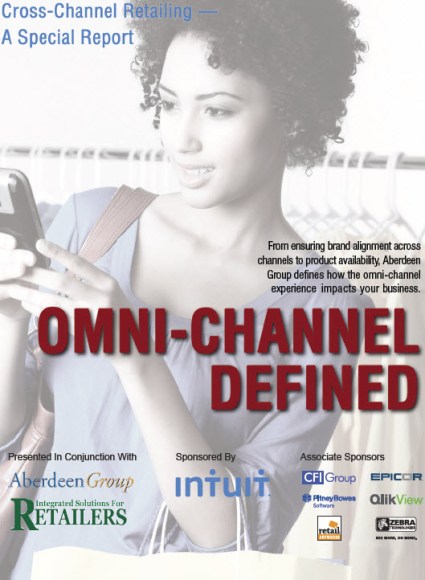
Cross-Channel Retailing: A Special Report

Click the image below to access a new report on the multiple touchpoints involved with retailing today. This is a topic about which one can never learn enough! As the report notes: “The terms multi-channel, cross-channel, and omni-channel are used frequently in retail often interchangeably. These terms have infiltrated the retail industry, but what do they really mean? And more importantly, what do these terms mean to your business?”


Posted in Online Retailing, Part 2: Ownership, Strategy Mix, Online, Nontraditional, Part 3: Targeting Customers and Gathering Information, Part 8: Putting It All Together, Technology in Retailing | Tagged , , , , , , , , | Leave a comment

Globally, How Important Is Price in Grocery Purchases?

Nielsen recently conducted a major study of consumer grocery shopping behavior and attitudes in 56 countries around the world. The Nielsen online survey provides “insights into how 16 various factors have impacted grocery purchases in the last year. Manufacturers and retailers armed with this knowledge can fine-tune strategies to better align with what matters most to consumers — and what does not.”
Nielsen’s number one finding is that “85 percent of respondents say that rising food prices are impacting their choice of grocery purchases, with more than half (52%) stating higher prices are a major influence. But price is not the only consideration that weighs heavily on the minds of consumers when shopping for groceries. Health factors, product availability, and in-store services are also important considerations.”
For study highlights, click the chart.


Posted in Global Retailing, Part 1: Overview/Planning, Part 3: Targeting Customers and Gathering Information, Part 6: Merchandise Management and Pricing, Part 8: Putting It All Together | Tagged , , , , , , , , | Leave a comment