-
RSS feed
Categories
Retail Management Supplements
-
Recent Posts
Archives
Twitter Updates
Tweets by BEretail
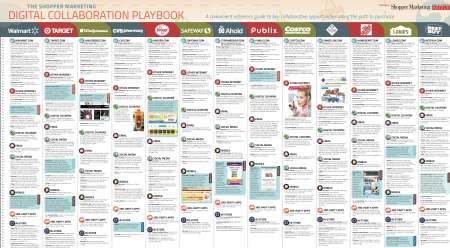
The Digital Collaboration Playbook of 13 Retail Leaders
Posted in Online Retailing, Part 1: Overview/Planning, Part 2: Ownership, Strategy Mix, Online, Nontraditional, Part 3: Targeting Customers and Gathering Information, Part 5: Managing a Retail Business, Part 6: Merchandise Management and Pricing, Part 7: Communicating with the Customer, Social Media and Retailing
Tagged competition, customer expectations, customer service, digital, experiential retailing, infographic, merchandising, multichannel, Path to Purchase Institute, promotion, retail analytics, tips
1 Comment
Franchising Can Be Much Riskier Than Some Believe
About a year ago, we wrote about the questionable nature of the 90% success rate for franchisees (a figure promulgated by the industry).
Now, two recent Wall Street Journal articles raise even more questions about the viability of a franchised business from the vantage point of the franchisee.
In the first article (“Is Buying a Franchise Riskier Than Ever?”), Sarah E. Needleman notes that:
“Franchising has never been a more popular option — or, perhaps, a bigger risk. Over the past few years, people have been flocking to franchising, seeing it as a simpler path to entrepreneurship in troubled economic times. But over that same period, numerous pitfalls have appeared that make franchising much tougher to navigate, say many franchise attorneys and advocacy groups. For one, they say, it’s gotten much more complicated for buyers to get an accurate picture of a franchise before taking the plunge. And, they add, if people do buy into a chain, they may have less leverage over things like how they can pursue complaints against the franchise
“Of course, vetting a franchise has always been a challenge. Franchisers are not legally required to share key financial metrics with prospective buyers, such as franchisees’ first-year average sales and failure rates. Further, there’s no central regulator that checks franchise disclosure documents. But these days, many franchise systems are just a few years old and have limited track records for prospective buyers to assess.”
In the second article (“Franchise Brands With Higher-Than-Average Default Rates”), Sarah E. Needleman and Coulter Jones note that:
“Quiznos, Cold Stone Creamery, Planet Beach Franchising, and Huntington Learning Centers Inc. ranked among the 10 worst franchise brands in terms of Small Business Administration loan defaults. Franchisees of the 10 brands in the ranking defaulted at more than double the rate for SBA borrowers who invested in all other chains, according to a Wall Street Journal analysis of charge-offs of all SBA-backed franchise loans in the past decade.”
“Put another way, franchisees of those 10 brands have left taxpayers on the hook for 21% of all franchise-loan charge-offs in the past decade, collectively failing to pay back $121 million in SBA-guaranteed loans from 2004 through 2013. That finding comes as franchising is booming in popularity, in part because many people see it as an easier route to entrepreneurship in an uncertain economic landscape.”
Posted in Part 1: Overview/Planning, Part 2: Ownership, Strategy Mix, Online, Nontraditional, Part 4: Store Location Planning, Part 5: Managing a Retail Business
Tagged bad behavior, competition, ethics, failure, franchisee, franchising, information, planning, Small Business Administration, trends, trust
3 Comments
Revitalizing the Mall
As we have reported before (see this post, for example): “Shopping centers remain very popular in the United States — in the face of strong competition from online retailing and stores not located in shopping centers. However, this strength varies by the type of center.”
To revitalize themselves, several mall operators, such as Simon Property Group and Westfield, are doing some innovative things — as reported by Laura Heller for Forbes:
“Simon recently announced it would host mini-marketplaces in six of its U.S. malls. It’s a partnership with with Refinery29, an online site devoted to fashion. Refinery29 doesn’t sell merchandise, but its stamp of approval goes a long way toward furthering a brand or label. Simon is also creating what it calls “smart malls” by adding iBeacons to roughly 75 properties. The technology, developed by Apple, allows for the placement of small transmitters inside spaces that communicate with smartphones over a version of Bluetooth.”
Westfield malls are testing mobile ordering that lets shoppers order food from their smartphones for pick-up or delivery. The goal is to extend the service to other retail tenants. Westfield’s Labs division earlier this year, installed a life-size touch-screen mirror in a New Jersey mall that lets shoppers browse products offered by retail tenants.
Click the image to read more of Heller’s story.
Posted in Part 1: Overview/Planning, Part 2: Ownership, Strategy Mix, Online, Nontraditional, Part 3: Targeting Customers and Gathering Information, Part 4: Store Location Planning, Part 5: Managing a Retail Business, Part 6: Merchandise Management and Pricing, Part 7: Communicating with the Customer, Part 8: Putting It All Together
Tagged competition, customer expectations, customer loyalty, customer service, experiential retailing, mall, multichannel, online shopping, planning, promotion, shopping center, Simon Property Group, tips, Westfield
4 Comments