As we know, personalized retailing is a big deal. Thus, personalized retailing’s future looks engaging [pun intended 🙂 ]. Let’s see why. And offer several tips.
Background on Personalized Retailing
So, how should we define personalized retailing? Consider these observations:
- One of the toughest issues for retailers is how much to personalize. On the one hand, firms need as much customer data as possible to target individual shoppers. On the other hand, many customers want their privacy. And they do not appreciate it when they are overly tracked. [1]
- In today’s high-tech marketing environment, personalization is a major competitive advantage. Thus, personalization can involve products such as the NikeiD footwear line as well one-to-one communications. As Conversant Media puts it: “Virtually everyone agrees a personalized message tailored to an individual’s wants and needs is more apt to drive a sale than a general one.” [2]
- Neustar (a data-intelligence firm) published a report on personalized marketing (retailing). “Customers expect it. And technology enables it. As a result, brands that deliver it generate huge increases in ROI. It goes beyond adding a customer’s name to communication. Customers expect relevant content in the right channel at the right time. Whether on a brand’s Web site, a social network, or an E-mail inbox. For brands, delivering one-to-one experience at scale requires leveraging complex data sets, processes, and platforms.” [3]
Personalized Retailing’s Future Looks Engaging
Consulting giant McKinsey & Co. produces excellent FREE material. And it covers diverse topics. Recently, it published this article. “What Shoppers Really Want from Personalized Marketing.” In that article, McKinsey notes:
“Gotten an unsolicited and irrelevant offer on something you’ve done online? Know the creepy feeling that ‘someone is watching me’? This reaction is the third rail of the drive to personalize interactions with customers. And that’s a problem because, if done right, personalization can be a huge hit. Targeted communications that are relevant and useful create lasting customer loyalty and drive revenue growth. The challenge: To personalize in a way that doesn’t cross lines and delivers genuine value and relevance. But how do you know?”
Click the image to access the article.
Personalized Retailing Tips
According to McKinsey, what do consumers value most?
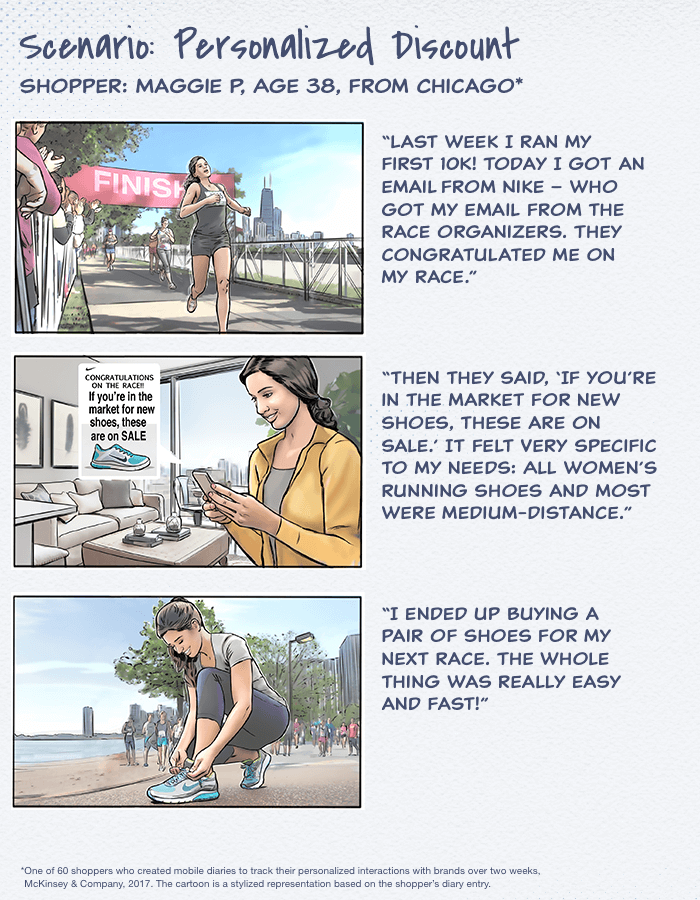
1. “Give me relevant recommendations I wouldn’t have thought of myself. Shoppers don’t want constant reminders of products they’ve already bought or searched for. Especially if the ads appear either too soon, too often, or too late in the process.” Instead, personalize products. The figure shows a McKinsey example of this.

2. “Talk to me when I’m in shopping mode. Previous order data can provide useful cues about activities. Such as ordering a gift for someone’s birthday or anniversary.”
3. “Remind me of things I want to know but might not track. So, help shoppers track specific events. Such as when someone may be running out of an item bought earlier. When a desired item is back in stock or on sale. Or when a new style is launched for a product or category the shopper has often bought.”
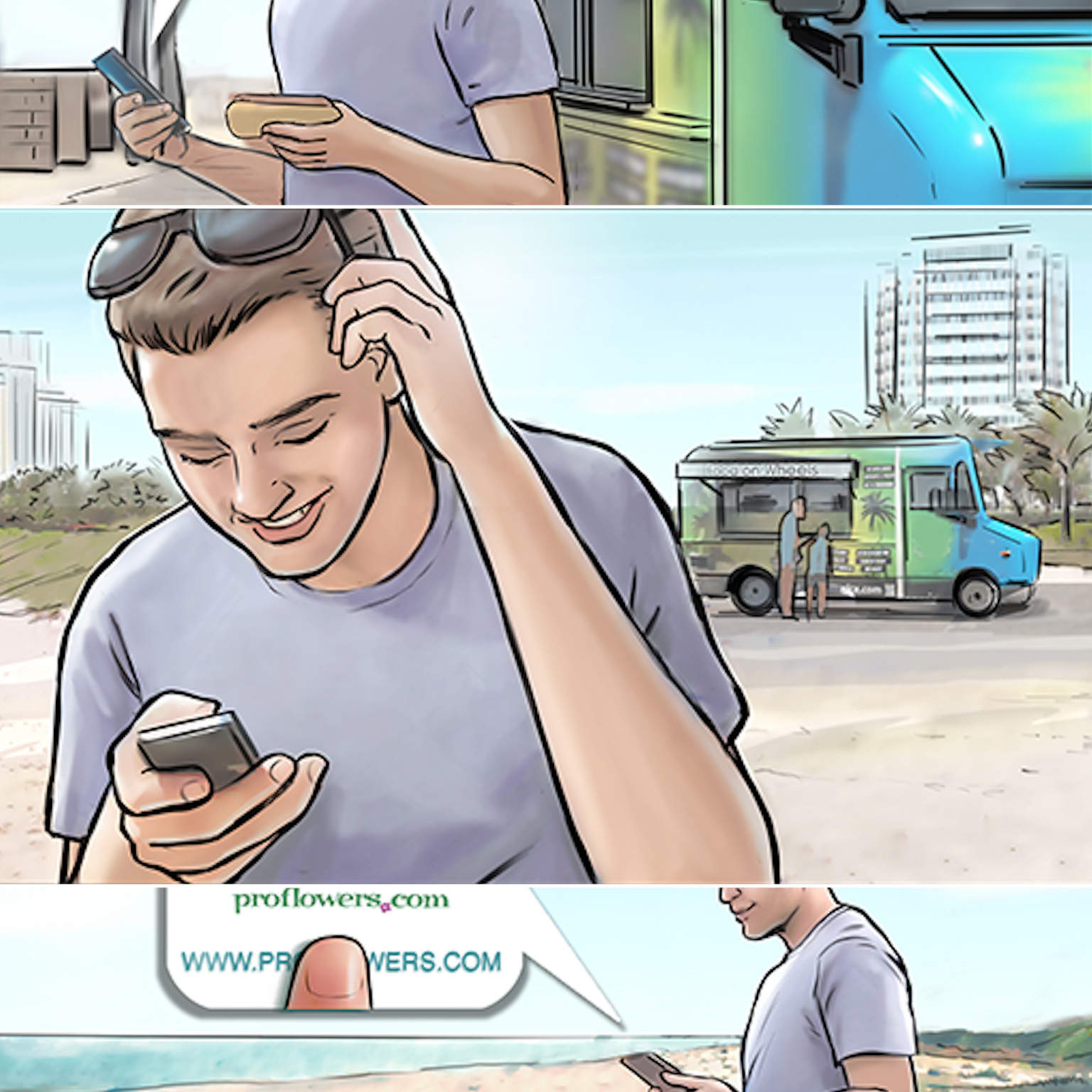
4. “Know me no matter where I interact with you. Thus, communications that seamlessly straddle online and offline experiences make a customer feel a firm really knows them.” And the figure shows a McKinsey example of this.
5. “Share the value in a way that’s meaningful to me. For instance, loyalty programs and purchase data are useful. (a) By telling firms the products an individual customer buys. (b) By seeing how often he or she buys. (c) Be learning when they buy. (d) And by knowing what product categories they never buy. Thus, personalizing (‘gamifying’) the experience leads to purchases and new buying behavior.”


