Pre-Election Economics Interview with Hof Prof

Hofstra University’s Zarb School of Business Distinguished Professor Joel Evans was recently interviewed by the award-winning Hofstra radio station WHRU about the impact of the presidential election on the economy. Here is that 25-minute interview. The views are those of Professor Evans and not Hofstra University.


Posted in Part 1: Overview/Planning, Part 2: Ownership, Strategy Mix, Online, Nontraditional, Part 3: Targeting Customers and Gathering Information | Tagged , , , , , , , , , , | 1 Comment

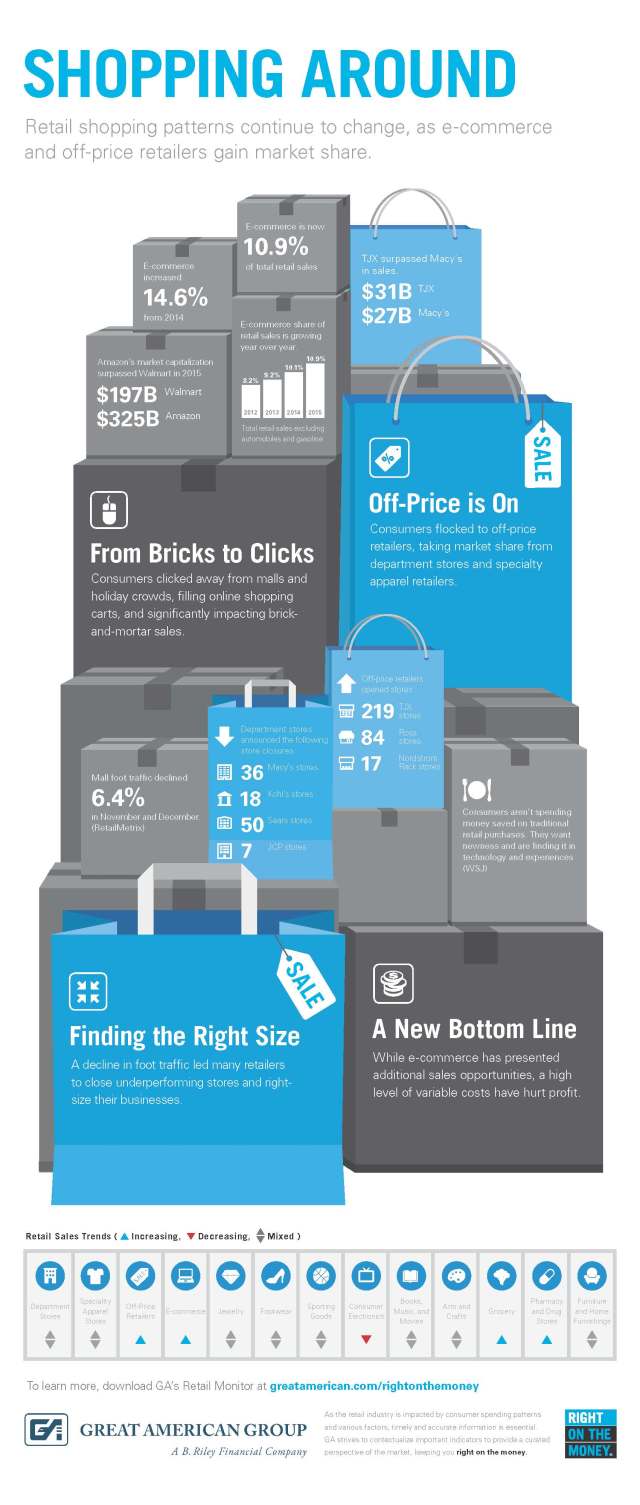
Monitoring Retail Shopping: An Infographic

For a recent issue of its Retail Monitor newsletter, Great American Group developed an interesting infographic on the shifting patterns of shopping.

 
retail-infographic-april-2016
 

Posted in Part 1: Overview/Planning, Part 2: Ownership, Strategy Mix, Online, Nontraditional, Part 3: Targeting Customers and Gathering Information, Part 6: Merchandise Management and Pricing | Tagged , , , , , , , , , , | 1 Comment

Who Comes First: The Customer Or the Employee?

The question in the title to this post raises an interesting issue. Yet, the answer is not as simple as it may appear. Of course, retailers should always want their customers to be happy — and therefore, profitable and hopefully loyal. But we also recognize that employees need to be happy if they are to provide the best customer service. 
As Joseph Michelli writes for Customer Think:
“The issue of employee versus customer primacy falls into the category of   unanswerable debates such as which came first the chicken or the egg. That said, many leaders continue to articulate a mantra that either the customer or the employee ‘comes first.’ While I personally like to side-step this looping debate by suggesting that ‘all business is personal,’ and that personal connections must be formed with the people we call employees in order for those people to profit and serve other people we call customers or shareholders, I am convinced greater leaders have a penchant for forming meaningful personal connections at all levels of an organization.” 
  1. Employee Engagement Drives Customer Engagement. While a causal relationship would be difficult to prove, strong correlations exist between employee engagement and customer engagement.”
  2. Customer Engagement Drives Loyalty and AdvocacyCustomer satisfaction does not ensure customer loyalty. In fact, satisfaction alone leaves your customers a coupon away from trying a competitor. As such, great leaders and business owners seek to instill a culture of service excellence.”
  3. Business Must Be Transacted for High Efficiency but Filtered through the Lens of HumanityIn my book, Leading the Starbucks Way, I share a conversation I had with the company’s CEO Howard Schultz in which he demonstrates this point best, ‘Take love, humanity, and humility and then place it against a performance-driven organization.'”
Click the image to read more.


Posted in Part 1: Overview/Planning, Part 2: Ownership, Strategy Mix, Online, Nontraditional, Part 3: Targeting Customers and Gathering Information, Part 5: Managing a Retail Business, Part 7: Communicating with the Customer, Part 8: Putting It All Together | Tagged , , , , , , , , , | 1 Comment