How Many Job Interviews Should Companies Conduct?

As we know, the job search tends to be stressful. And that especially applies to the interview stage of the process. In some cases, firms conduct numerous interviews with their best candidates. We realize that job candidates get frustrated by this. But are even firms well served by that approach? Today, we address this question. How many job interviews should companies conduct?

These posts highlight various aspects of interviewing:


Google Answers: How Many Job Interviews Should Companies Conduct?

For several years, Google researched how many interviews should companies conduct? And the findings contradict many firms’ practices.

As reported Michael Schneider for Inc.:

“Finding the right job candidate can be a challenge. Sometimes, it feels like looking for a needle in a haystack. When interviewing drags on, work goes incomplete. Other employees feel stressed and overextended. At the same time, hiring managers get impatient. And top talent begins flying off the shelf.”

“To avoid bad hires, Google used to subject candidates to a grueling 12-interview process. And this created many problems. Due to its status as a great employer, Google receives more than two million job applications each year. That makes landing a job at Google is 10 times harder than getting into Harvard.”

“To ensure the need for so many interviews, Google’s People Analytics Team examined five years of data and feedback. Specifically, they wanted to know how many interviews it took to predict whether or not a candidate would receive an offer. And Google found that after four interviews, the likelihood that another interview would improve a candidate’s chances of getting an offer dropped. For every extra interview, the law of diminishing returns set in.”

“This research, in addition to other experiments, led Google to follow the ‘Rule of Four.’ This change resulted in a two-week reduction in the average time-to-hire, saved Google employees thousands of hours in interviewing time, and helped reduce the already tedious process for candidates.”

To read more, click the image.

How Many Job Interviews Should Companies Conduct
 
And take a look at this video.

Posted in Career Video Clips, Retail Executive Interviews | Tagged , , , | Leave a comment

Offline Innovations in Retail – Infographic

Thank you to Patrick Thuot, vice-president with traffic counter supplier Storetraffic for today’s guest post.


Offline Innovations in Retail

There is no doubting the fact that the retail niche has been a state of huge change over the last number of years. Predominantly this is due to advancements in technology and specifically E-commerce and the Internet. As a result of these changes, consumers have changed their behaviors and now like to try different styles and types of shopping. Malls and brick and mortar retailers have directly felt the brunt and we have witnessed and continue to see many store closures throughout the country. This does not however mean the end of brick and mortar retail. While it is true that retail has changed and consumers demand new experiences, traditional retailers can and are fighting back. They do definitely need to change tactics and think strategically but it is possible to pull things through and move into the future of retail which encompasses both on and offline.

The folks at Storetraffic have put together this infographic which outlines everything you need to know about offline innovations in retail. These can include things like use of data in a leverage style or utilizing an omnichannel approach to the niche. Read through the infographic to gain further insight and to stay ahead of the posse!

Click the infographic for a larger view.

Offline Innovations in Retail – Infographic


Posted in Part 2: Ownership, Strategy Mix, Online, Nontraditional, Part 5: Managing a Retail Business, Part 6: Merchandise Management and Pricing, Part 7: Communicating with the Customer | Tagged , , , | Leave a comment

Young Adult Views Toward Brands

In recent years, we know that many manufacturer brands have come under price pressure. With more people turning to less-expensive brands. But did you know that brand perceptions differ by generation? Today, we look at young adult views toward brands.

To start, consider these posts about branding:


Young Adult Views Toward Brands

As compared to older adults, younger people now view brands quite differently. And they expect more from them.

In this section, we include several brand-based factors based on Do Something Strategic research. The discussion is drawn from the “2018 Survey of Young People and Social Change.”

Next, we offer some excerpts from this survey:

“Young people  – 13–25 year olds  —  represent the most racially and culturally diverse generation in American history. And they refuse to be bound by traditional ideological boxes. In fact, nearly half of respondents identify as independent or unaffiliated. And 50% view themselves as moderates.”

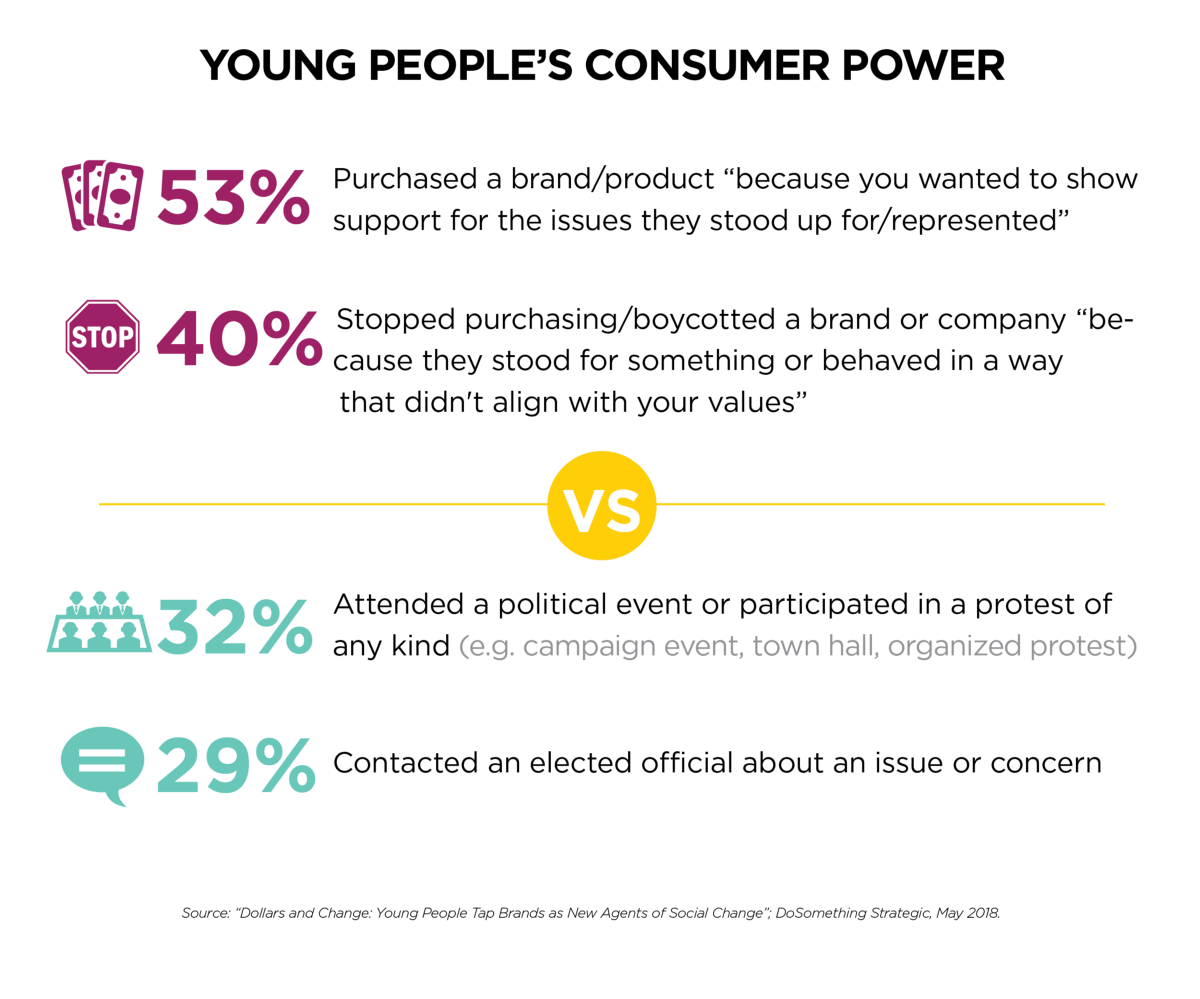
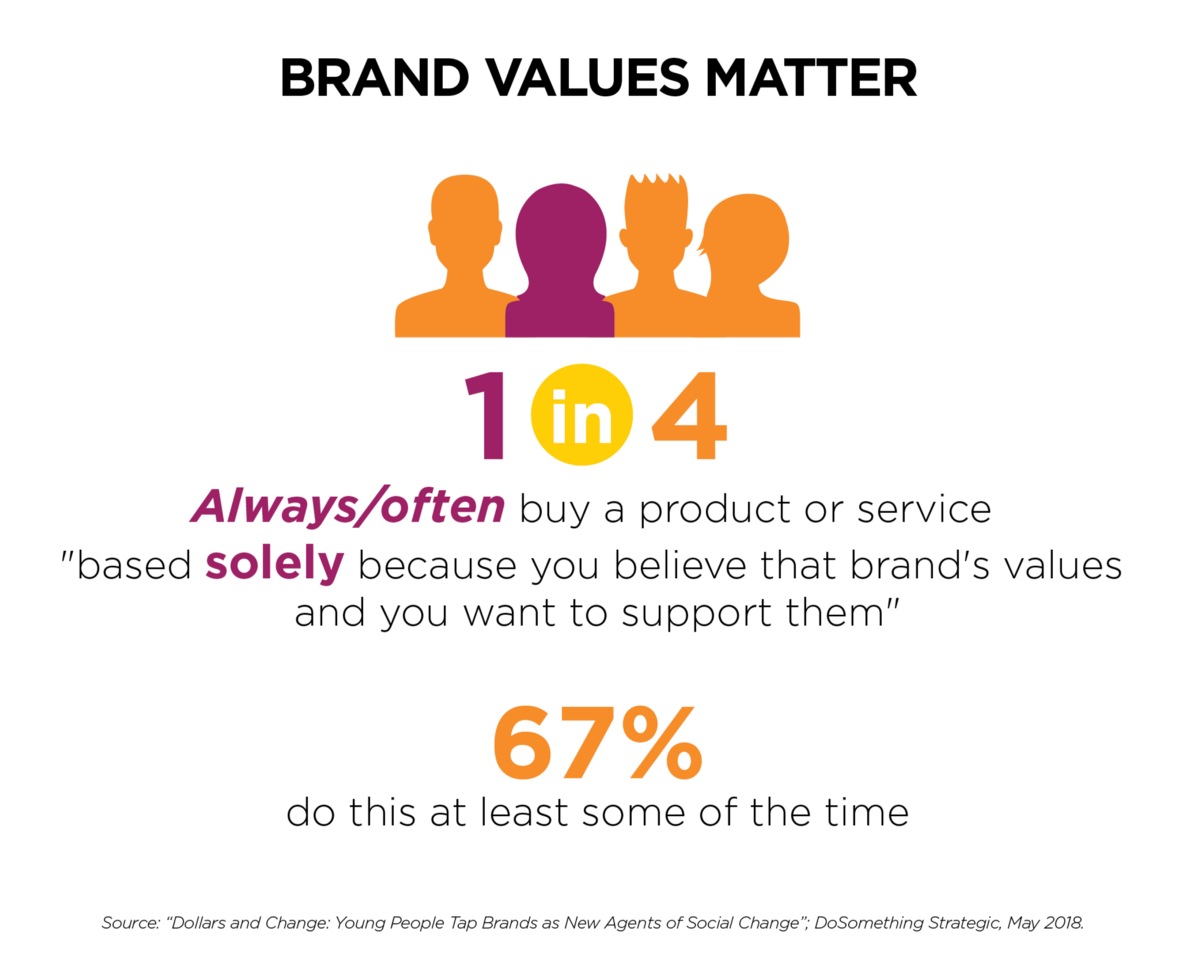
“For quite a while, young people looked to brands for leadership in a variety of areas important to them . And these include technology, music, entertainment, and fashion. Perhaps it’s no surprise that they would add social change to that list. Thus, they’re making companies   responsive and responsible. And companies large and small better take notice — by 2020, Gen Z will account for about 40% of all customers, and they’re prepared to speak with their dollars.”

Therefore, consider these charts.

Young Adult Views Toward Brands

“Yet, a plurality of respondents would not buy a more expensive equivalent product or a lesser quality product even if the brand was clearly superior from a socially or environmentally responsible standpoint.”

Young Adult Views Toward Brands

So, what is most important?

Young Adult Views Toward Brands

In conclusion: “Social stewardship hasn’t replaced price and quality in the buying decision matrix. But as everything from potato chips to laptops becomes commoditized, stewardship becomes a definable difference maker.”

Young Adult Views Toward Brands

Posted in Part 2: Ownership, Strategy Mix, Online, Nontraditional, Part 3: Targeting Customers and Gathering Information, Part 6: Merchandise Management and Pricing, Part 7: Communicating with the Customer | Tagged , , , , | Leave a comment